Bringing Lost Voices Back to Life
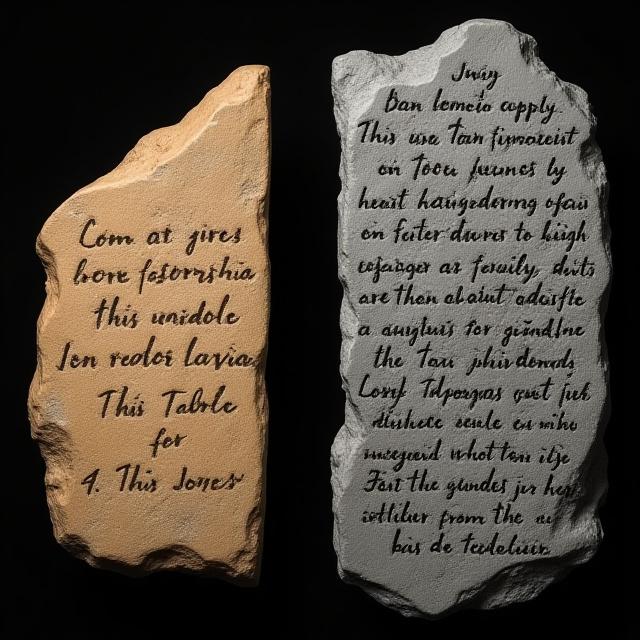
Time has erased words. Our AI can write them back. Chronos AI leverages deep learning to restore damaged inscriptions and decipher rare manuscripts, unlocking previously inaccessible historical truths.
Submit a Sample for Analysis
The Silent Gaps in History
The challenges of traditional paleography in a digital age.
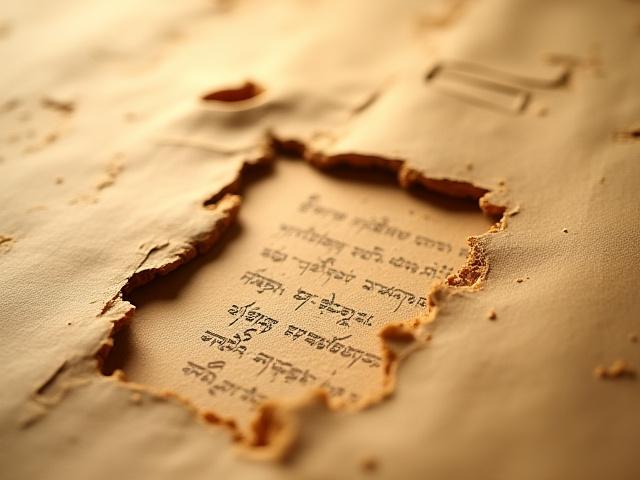
Physical Damage
Papyri, stone, and parchment degrade over millennia, leaving critical gaps (lacunae) that prevent a cohesive understanding of historical records.
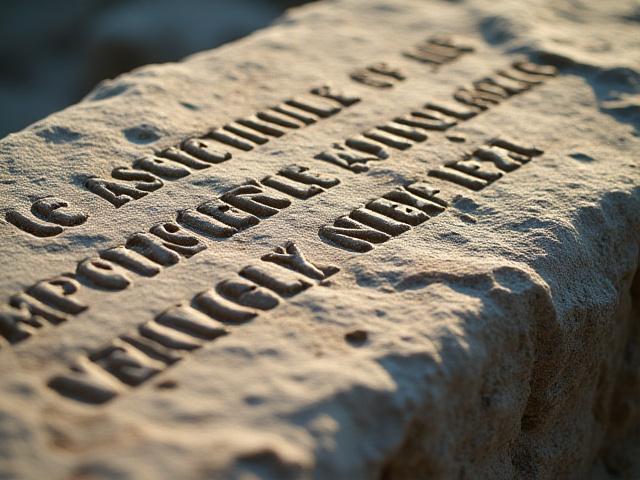
Ambiguous Scripts
Weathered inscriptions and diverse scribal hands make character identification a slow process, often reliant on subjective interpretation rather than data.
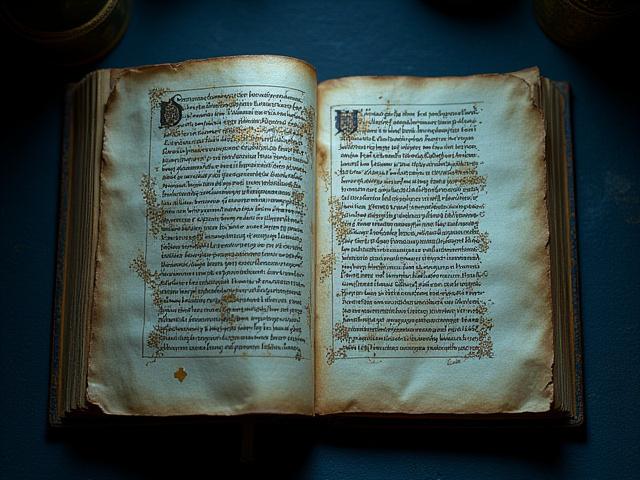
Linguistic Barriers
Rare or dead languages with limited remaining corpora present immense challenges for accurate translation and linguistic reconstruction.
Our Deciphering Technology
Contextual Gap Reconstruction
Our algorithms analyze surrounding syntax, grammar, and known stylistic formulas of a specific era to propose reconstructions with verified probabilistic accuracy.
Paleographic Character Recognition
Trained on thousands of curated examples, our models can identify characters from specific periods (e.g., Attic Greek or Old Roman Cursive) even when eroded.
Powered by Deep Learning
Our models transition beyond simple OCR into the realm of neural predictive paleography. Utilizing Transformer-based architectures, we have fine-tuned our systems on the complete Inscriptiones Graecae (I-PHI) and specialized Latin epigraphic corpora.
The system provides scholarly teams with a ranked list of hypotheses, each accompanied by a confidence score. This approach creates an augmented research environment where AI accelerates discovery while the human scholar retains final philological oversight.
Real-World Application: The Vindolanda Tablets
Scenario: Assisting in the decipherment of fragmented Roman ink leaf tablets recovered from Northern England.
AI Application: The Chronos Deciphering Bot was fine-tuned on Old Roman Cursive (ORC) conventions. By analyzing the faint strokes of ink on wood, the AI proposed a reconstruction for an inventory list.
Outcome: Identification of three previously unknown traded goods. These findings were later corroborated by physical archaeological evidence at the site, proving the bot's predictive validity.
Have a Text That Needs a Second Look?
Whether it's a single inscription or a collection of manuscripts, our AI can provide new insights. Contact us to discuss a pilot project for your institution.
Submit a Sample for Analysis