Supercharge Your Research.
From Corpus to Conclusion.
We collaborate with universities and Digital Humanities labs to build the custom AI tools you need to answer your most ambitious research questions. Transform archival silence into data-driven insights.
Explore Research PartnershipsYour Collaborative Research Partner
Integrating seamlessly into the academic lifecycle, from the first grant application to the final peer-reviewed publication.
Phase 1: Grant & Design
Chronos AI acts as a technical co-investigator. We work with you to design the technical components of your research project and co-author grant proposals for major bodies like the NEH or Mellon Foundation.
Phase 2: Custom Development
We build specialized tools tailored to your unique sources. Our engineers develop models for rare scripts, 18th-century newspaper layouts, or specific watermark identification in archival paper.
Phase 3: Analysis & Publication
We assist in running the large-scale analysis and provide comprehensive methodological documentation and data visualizations suitable for inclusion in high-impact academic journals.
Capabilities for the Modern Researcher
Large-Scale Corpus Analysis
Go beyond simple keyword searches. Utilize advanced NLP, topic modeling, and sentiment analysis on text corpora spanning millions of digitized pages.
Historical Map Interpretation
Automatically georeference historical maps and extract features like buildings, roads, or land-use patterns to create dynamic GIS datasets.
Archival Image Recognition
Train computer vision models to identify specific visual motifs, objects, or people across massive photographic and botanical archives.
Handwriting Recognition (HTR)
Customized HTR models for high-accuracy transcribing of difficult manuscript hands, even within non-standard scripts or damaged sources.
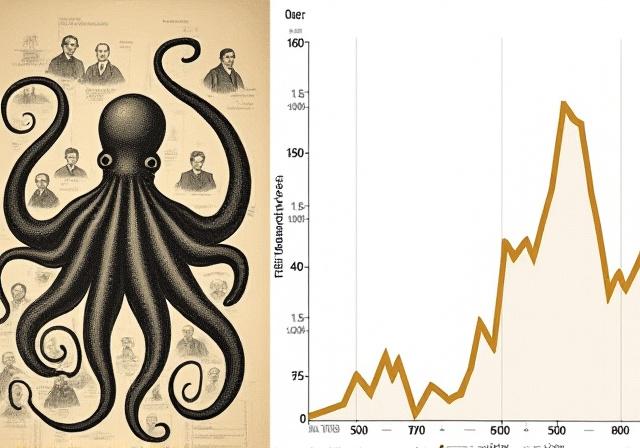
Project Spotlight: Tracing Visual Tropes in Political Cartoon Archives
Research Question: How did the visual representation of 'The Trust' evolve in American political cartoons from 1880-1920?
Collaborating with the University of Digital Humanities, we processed 15,000 digitized cartoons. Using a bespoke computer vision model, we tracked the frequency of specific tropes—the octopus, the bloated tycoon, and the 'Common Man'.
Outcome: The analysis revealed a sharp 400% spike in 'octopus' imagery following the 1901 merger of U.S. Steel, providing the quantitative backbone for a landmark visual history publication.
Have a Research Challenge?
Let's discuss how a custom AI pipeline could unlock new possibilities for your next research project or grant application. Our experts are ready to join your technical committee.
Discuss a Research Partnership